Hansel and Gretel
This is the whole tale, the same ten pages it runs in Pillowbook on the phone. Not a word is cut, and nothing asks you to sign up. The first three pages carry the paintings they were given; the rest of the plates are in the app, where the book is read one page to a screen.
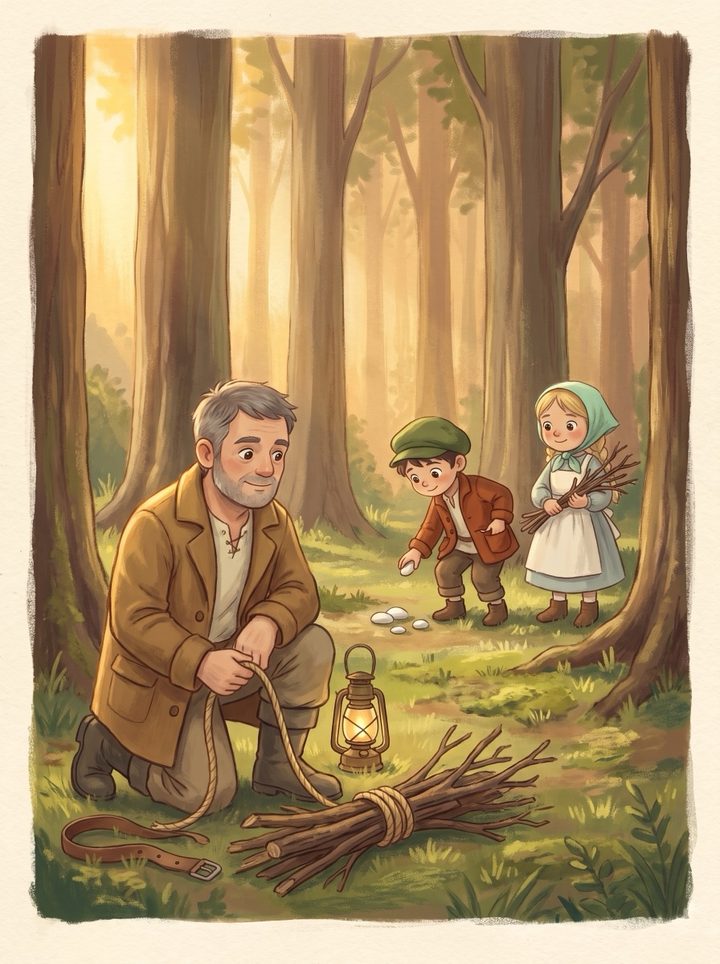
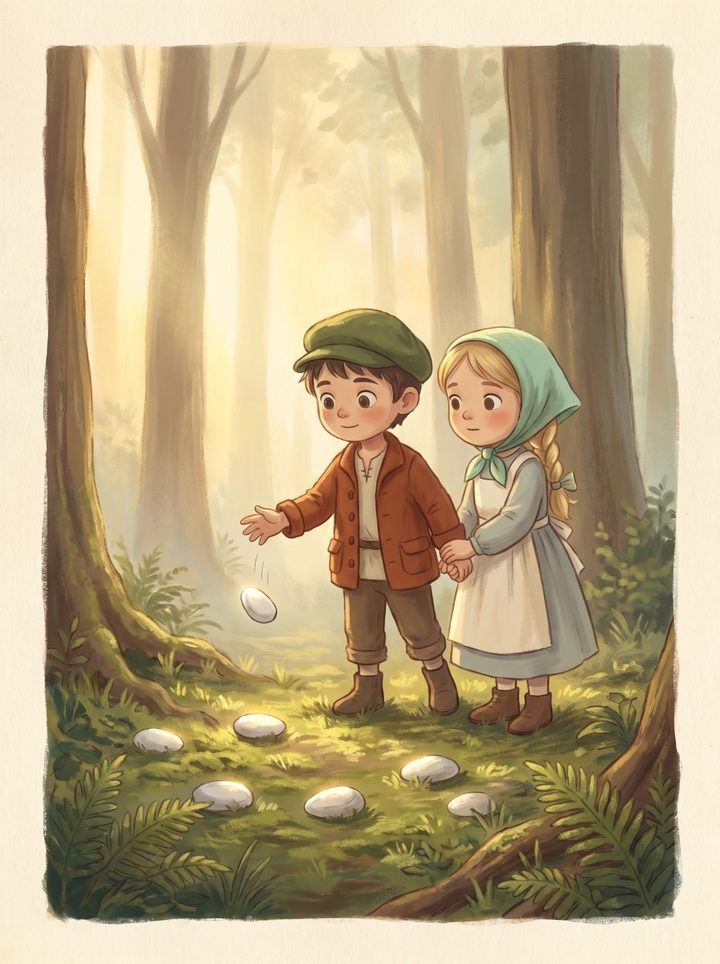
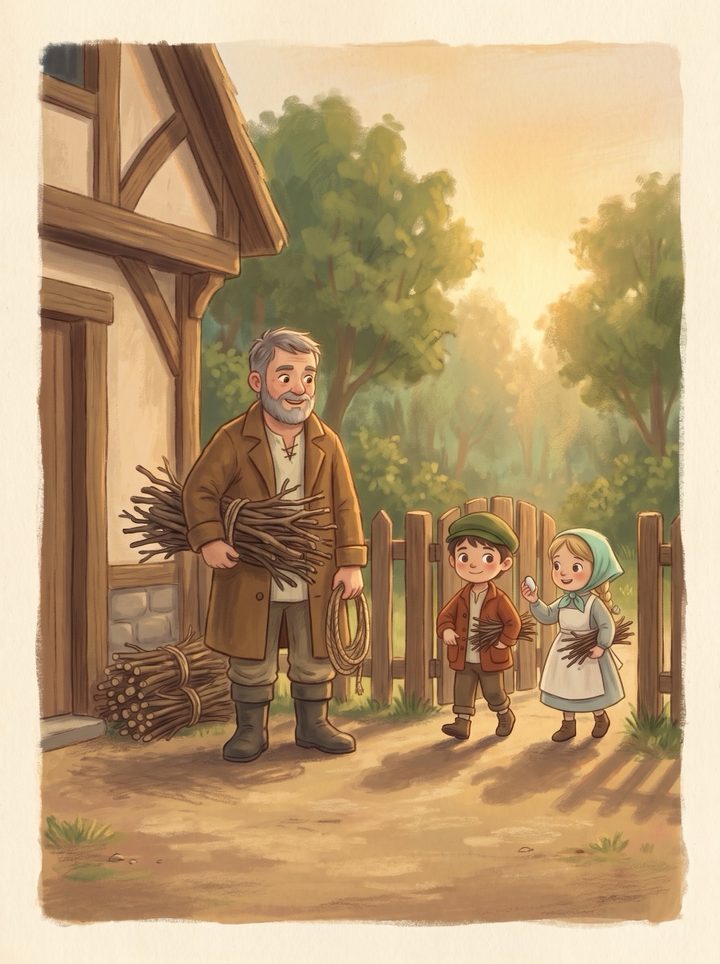
The next morning they went again. There were no pebbles this time, so Hansel took yesterday’s bread from the table and carried it in his hand. As they walked he crumbled it, a little at every turning, and the crumbs lay in a pale line on the moss behind them. “A bread trail,” said Gretel. “It will bring us straight home.” Hansel kept looking back at it.
At midday the mist came down again, and they turned back along the path. But the moss was bare. Plump white birds were stepping about among the roots, pecking up the very last of it. Hansel pulled his pocket wide open with both hands and looked into it. Gretel took hold of his arm. There was not one crumb left. “They must have been hungry,” said Gretel. The birds went on eating.
So they walked on, keeping close together, and the mist began to thin. Then the trees opened and there was a cottage in the middle of the clearing. Its walls were gingerbread, brown and rough. White icing curled around the windows. A row of round buns was cooling on the sill, and the whole clearing smelled of warm baking. Gretel wondered who did the baking.
The door opened before they could knock. A small old woman with a round back looked at them through very thick glasses, turning a key on a lavender ribbon. “My eyes are poor and I lose everything,” she said. “So I lock the door. I shall hang the key on the chair, and you can let yourselves out.” She pulled the door wide. “Come in while I watch my buns.”
The kitchen was warm and yellow with lamplight. The old woman peered at the shelf. “Oh, I shall never see it in these glasses. Is that a dry twig? Hold it up for me.” Hansel held it up. She leaned in until her glasses very nearly touched it. “Goodness,” she said, delighted. “What a twig.” Gretel could not help laughing.
The buns were ready, and the old woman lifted the tray out of the oven with two cloths. “Thank you,” said Gretel, “but it is time we went home to our father.” “Off you go, my dear,” she said, and turned to the table to count her buns. Gretel lifted the key from the chair back. Hansel pulled the door open with both hands, and in came the daylight and two white birds on the path.
The white birds went ahead from tree to tree along the path, and the children followed them until the house showed at the edge of the wood. Their father was sitting on the step with the lantern beside him and one hand on a bundle of branches. “There you are,” he said, and hugged them both. They sat down beside him on the warm step. The birds settled along the fence.
The end.
Read any of them tonight, free
Classic fairy tales, ten painted pages each, one story an evening. No sign-up before you can read.
About this tale
Is this the full story?
Yes. All ten pages of Hansel and Gretel are here, word for word, and the story ends where it ends. The paintings for the first three pages are on this page; the other seven are in the app.
Is it suitable for a three year old?
It is written for children between three and eight. The children are sent away hungry and the woman in the wood means them harm. She is outwitted, not dwelt on, and they get home.
How long does it take to read aloud?
About five minutes at an unhurried pace, which is roughly one page every thirty seconds.
Where do the pictures come from?
They were painted for Pillowbook, one plate per page, in a single visual voice shared across every tale. They are not stock illustrations, which is why the full set is in the app rather than on the web.
Can I read the other tales here?
Yes. Every tale is on this site in full, free and without an account. The app is for reading them at bedtime — every plate, offline, no advertising, one page to a screen — and for the tale it writes about your own child.